How we work
Infrastructure first, interface second
Audit, design, deploy, optimize. The same release cycle every time, so nothing about your site ships on a guess.
Automation, AI, marketing and the platforms they run on. Engineered as one system and measured against revenue, not traffic.
#What_we_do
Most engagements begin with one of these, not four. The reason all four sit under one roof is accountability: when automation, advertising and the platform are split across three vendors, no one owns the number at the end and attribution dies in the handoffs. Working with a firm that covers all four means the recommendation is not shaped by what we happen to sell.
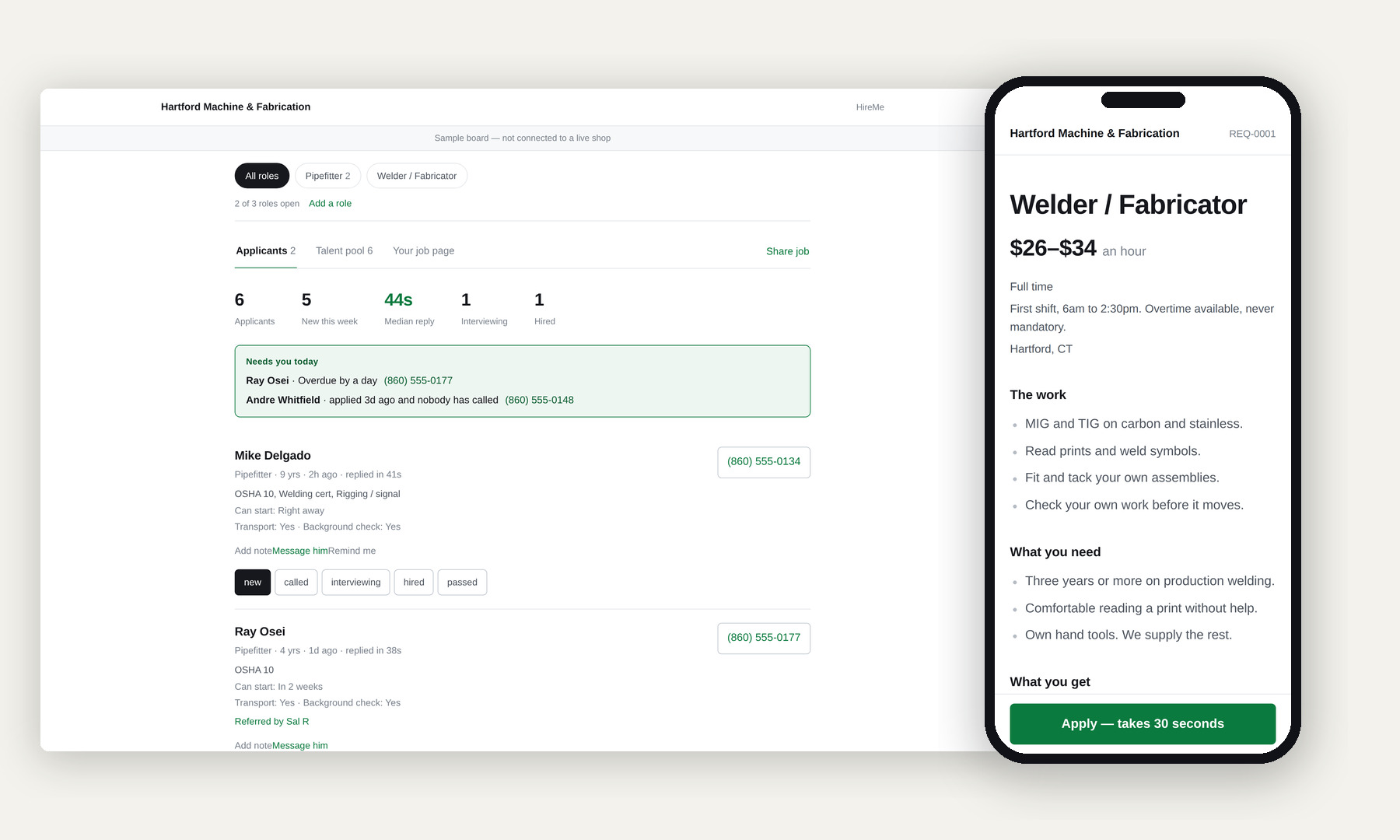
Most small firms lose money in the gap between an enquiry landing and somebody acting on it. That gap is where we work. A missed call triggers a text back before the caller has put the phone down. Enquiries route themselves to whoever is free. Quotes chase themselves on day three and again on day ten, without anyone remembering to do it. Built on Twilio, your existing calendar and whatever CRM you already pay for, so nothing new has to be learned. The number that matters is hours from first contact to booked job.
Google and Facebook ads aimed at people already looking for what you sell, local SEO so you show up in the map results when someone searches your trade near them, and content that earns rankings you are not renting by the click. Every call and form is tagged with where it came from, so you can see which ad or search actually produced the job. That tagging is the step most agencies skip, and skipping it is precisely why their reports lead with impressions instead of booked work.
Websites and app screens built around what people actually do on them, not around what looks good in a mockup. How long the form is, what you see first, how fast it loads, and whether it works on a phone, with a keyboard, or with a screen reader. We settle arguments with completion rate rather than opinion.
Customer portals, booking and dispatch, quoting tools, dashboards, and the internal software that finally retires the spreadsheet nobody trusts. Real code, a real database, deployed to accounts registered in your name. You could fire us tomorrow and keep every part of it.
Response time
Two findings, replicated consistently across two decades of sales research. Neither depends on any particular technology. Both describe what happens to an enquiry while it waits.
42 hours
is the average time a company takes to respond to an inbound lead, measured across 2,241 US businesses.
Oldroyd, McElheran and Elkington, Harvard Business Review, 201121x
more likely a lead is to qualify when it is contacted within five minutes rather than thirty.
Dr James Oldroyd, MIT and InsideSales Lead Response Management studyRead together, the two figures describe a structural problem. The window that determines the outcome closes within roughly five minutes. The average organisation responds in under two days. Most enquiries are lost in that interval, and because nothing records the loss, it never appears in a report.
Closing that interval is an operational problem rather than a technological one. It requires a system that responds within seconds at any hour, applies the same process every time, and records when it did so. Staffing cannot deliver that consistently, and neither can a chatbot positioned as a substitute for one.
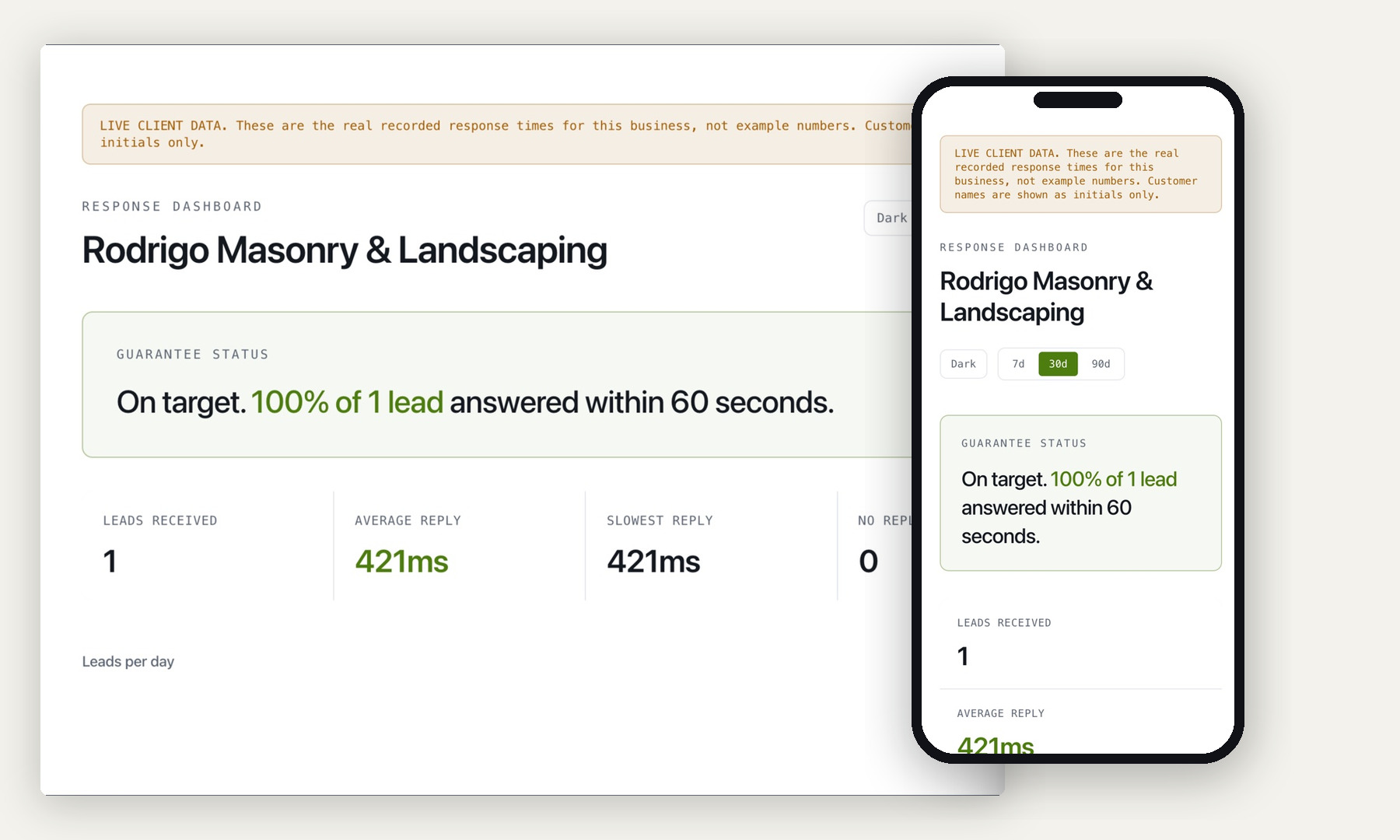
Every enquiry gets a reply in under sixty seconds, day or night. You get the dashboard showing every response time we recorded, not a summary at the end of the month. If we miss the target in any month, that month is free.
The commitment is offered because the response is automated and every timestamp is recorded server side, on a clock we do not set. A missed target indicates a fault in the system, and identifying it matters more than invoicing for the month it occurred in.
Case study
Rodrigo Masonry and Landscaping
Rodrigo had thirty years of finished stonework and nothing online to show it. The build went from first phone call to a live site in a week.

Most sites lose the visit before the page finishes loading. These are the numbers that decide it.
Measured on the Rodrigo build
Industry research
of mobile visits are abandoned when a page takes longer than three seconds to load.
higher chance a visitor bounces when load time goes from one second to three.
How we work
Audit, design, deploy, optimize. The same release cycle every time, so nothing about your site ships on a guess.
We start with what your traffic actually does. Where visitors arrive from, what they search for, where they drop off, and what a booked job is worth to you.
Structure, copy and interface agreed and prototyped before any code ships. You sign off on the real screens, not a description of them.
Production code, not a staging toy. Database, forms, analytics, search structure and performance budgets all land in the same release.
Launch is where the work starts. Enquiries, sources and spend report from day one, and the monthly plan turns that into the next release, the next campaign and the next thing to fix.
Every Aptivane build starts from the same engineering baseline. Pages are server rendered, every form is backed by a real database, search structure and tracking are wired in during the build rather than bolted on afterwards, and performance is held to a budget before launch instead of audited once it is too late to fix.
Scope, price and timeline are agreed in writing before the first line of code, and the price does not move unless you change what you asked for. The site ships to a domain and a repository in your name, so nothing about your business is locked behind us.
It depends on how many pages and how much has to be built rather than assembled. You get a flat number in writing before any work starts. No hourly billing, no change order surprises.
Most builds run two to three weeks from the first call. Rodrigo's took one week because he had photos ready and answered fast. Delays are almost always waiting on content, not code.
Yes. The site goes live on a domain in your name, the code is yours, and the ad accounts stay in your account rather than a shared agency one. If you ever move on, nothing has to be rebuilt.
Every enquiry is stored with the source that produced it, so the report is booked jobs against spend rather than impressions and clicks. If a channel is not paying for itself, that shows up early enough to stop it.
Software is the larger half of our work. Internal tools, customer portals, booking and quoting systems, dashboards, and the automation that connects them. If a process in your business currently runs on spreadsheets and people remembering to do things, that is the kind of engagement we take on.
Sometimes not. If the bones are fine and the problem is copy, search or tracking, that is a smaller and cheaper job, and the call will tell you which one you are looking at.
Most clients continue on a monthly plan, and there are two. Growth covers campaigns, content and reporting, so the site keeps producing work instead of sitting there. Care covers hosting, updates, monitoring and small changes, so nothing quietly breaks six months later. Both run month to month with no annual contract, and the build itself is yours either way.
Thirty minutes, no pitch deck. You describe the business, and you leave knowing what needs building, what it should cost, and what to do first.